
Understanding Tooth Pain
Tooth Pain? Let’s Find Out What’s Causing It.
Sharp pain, throbbing, sensitivity or discomfort when biting can have different causes. Reviewing your symptoms and examining your mouth helps identify the source and the appropriate next step.
- Acute Sharp or Throbbing Dull Pain
- Sensitivity or Pain While Biting
- Swelling or Fever
Yelahanka New Town, Bengaluru · Mon–Sat, 9:30 AM–7:30 PM

Difficulty breathing or swallowing, rapidly spreading swelling, or swelling near the eye requires immediate emergency medical care.
Understanding This Condition
Pain can arise from decay, inflammation or infection inside a tooth, a crack, exposed dentine, or the tissues around a tooth. Sometimes pain felt in a tooth comes from the jaw muscles or another source.
The pattern of pain helps guide the examination but cannot establish a diagnosis on its own. Your dentist may examine the teeth, gums, jaw muscles and temporomandibular joints (TMJs), test the tooth’s response and recommend imaging when clinically justified.
Signs & Symptoms
How to Recognise This Condition
These symptoms can have several causes. An examination helps establish whether treatment is needed.
Sharp, throbbing, or constant aching pain in a tooth or jaw
Pain or sensitivity when biting and chewing
Sensitivity to hot foods or drinks that lingers more than a few seconds
Sensitivity to cold that persists after the cold is removed
Swelling in the gum, cheek, or jaw near the painful tooth
Fever, bad taste in the mouth, or foul smell — arrange an examination
Headache or ear pain on the same side as the tooth
Pain that radiates from one tooth to the jaw, ear, or temple
Recognise Your Symptoms
What Kind of Tooth Pain Are You Feeling?
Choose the pattern that feels closest to what you are noticing. This cannot diagnose the cause, but it can help you explain the problem clearly during your consultation.
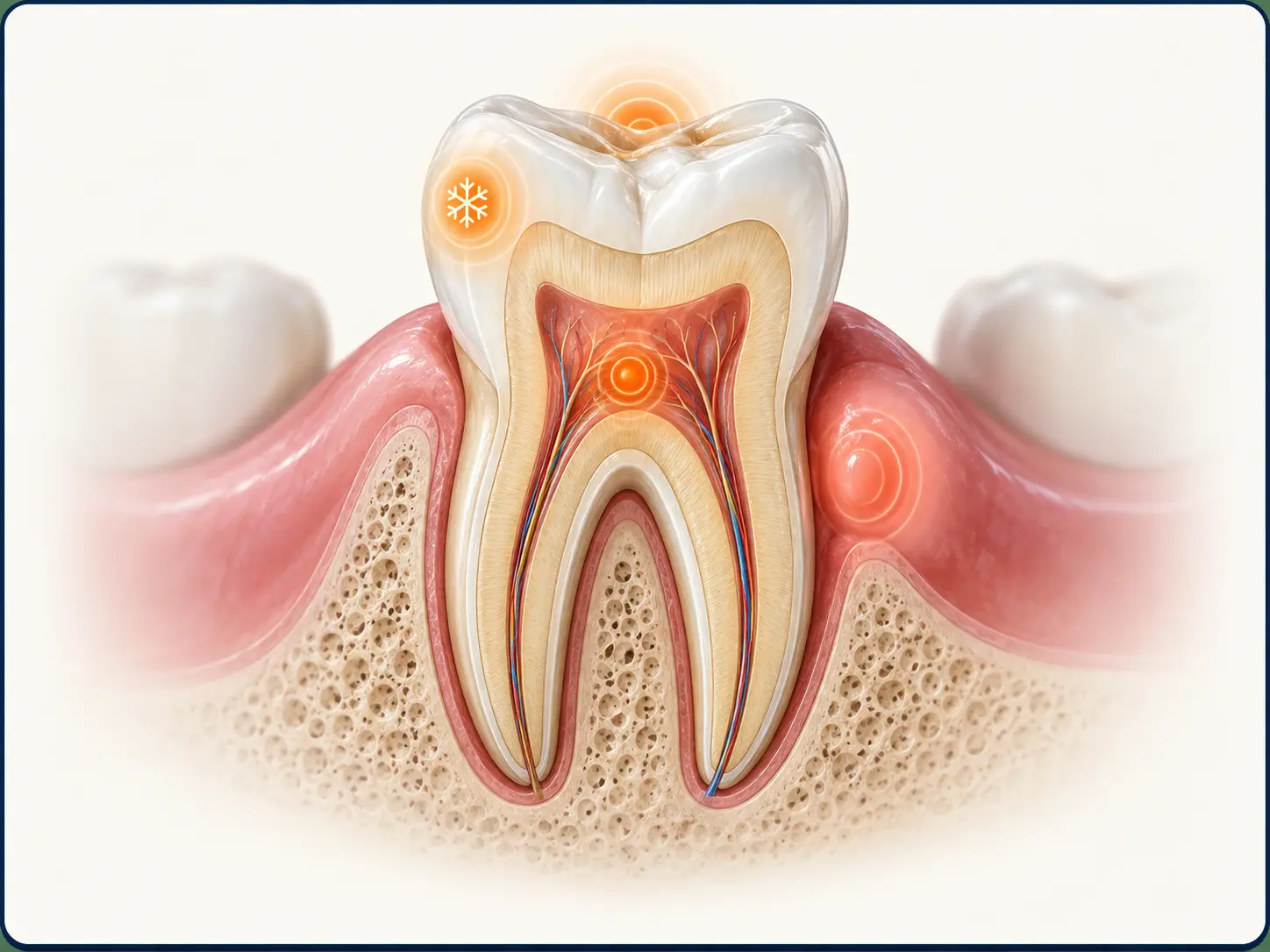
Your choice will open a short, patient-friendly next step here.
Root Causes
Why This Happens
Understanding the cause is the first step to choosing the right treatment and preventing recurrence.
Dental caries (cavities) — bacteria erode enamel and reach the sensitive dentine
Cracked or fractured tooth — invisible cracks cause sharp pain when biting
Dental abscess — a bacterial infection forms a pocket of pus at the root tip
Irreversible pulpitis — the pulp is permanently inflamed due to deep decay
Gum disease (periodontitis) — infection destroys the bone supporting the tooth
Exposed tooth root from gum recession
Damaged, broken, or lost fillings or crowns
Teeth grinding (bruxism) — causes chronic pressure and micro-fractures
Impacted wisdom teeth pressing on adjacent teeth
Treatment Options to Discuss
Your consultation covers suitable options, limitations and alternatives. Some conditions require specialist referral.
Root canal treatment
An infected or irreversibly inflamed pulp may need root canal treatment to clean and seal the canals. The number of appointments depends on the tooth and the findings. Learn about root canal treatment →
Fillings and restorations
A cavity or damaged restoration may be repaired when enough healthy tooth remains. The material and approach depend on its size and location.
Protective crown
A weakened tooth may benefit from a crown. Suitability, preparation, risks and the appointment sequence are discussed after consultation.
Managing an abscess
Urgent treatment addresses the source of infection and may include drainage, root canal treatment or extraction. Antibiotics are used only when clinically indicated.
Extraction and replacement options
If a tooth cannot be retained, discuss extraction and the advantages and limitations of implants, bridges or removable replacement.
Investigating Grinding or Referred Pain
If the source is outside the tooth, further dental or medical consultation may be appropriate before irreversible treatment.
What to Know Before Your Tooth Pain Consultation
Pain relief can help temporarily but does not replace investigation of persistent toothache. A change or disappearance of pain does not prove that an infection has resolved.
Bring details of when the pain began, triggers, previous treatment, medicines and medical conditions. At GardenCity Smiles™, the aim is to identify the source and discuss reasonable options, including retaining a tooth where appropriate.
Prevention
Care and Risk Reduction
These habits can support oral health. Your dentist may recommend additional measures for your circumstances.
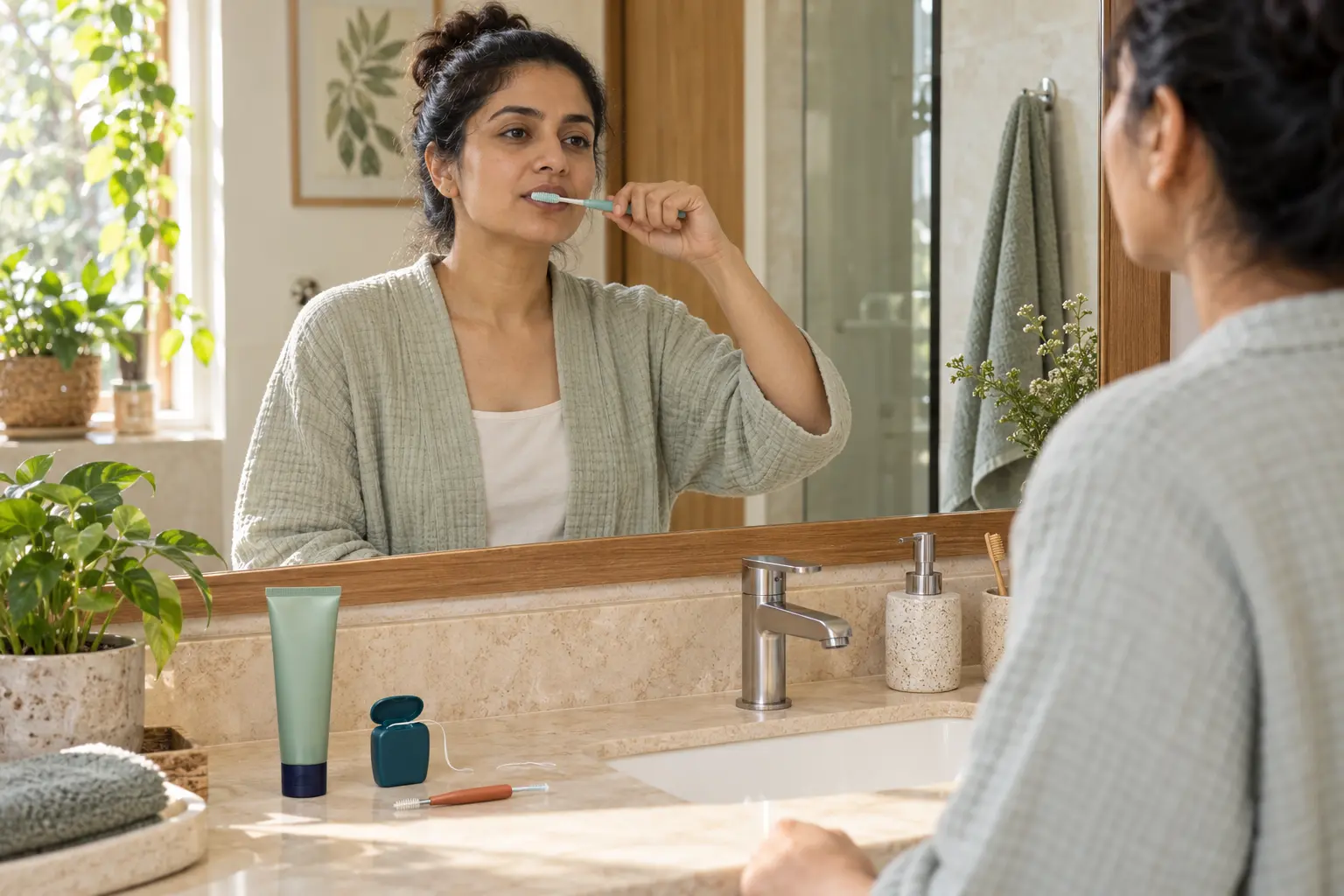
Brush gently twice daily with dentist-recommended toothpaste.
Clean between teeth daily with floss or a suitable interdental brush.
Stay well hydrated throughout the day.
Avoid tobacco and discuss support for stopping if needed.
Arrange dental reviews at intervals recommended for your individual risk.
When to See a Dentist
Arrange a dental visit for these concerns. Emergency symptoms need immediate medical care.
Toothache lasting more than 1–2 days
Pain severe enough to affect eating, sleeping, or concentrating
Visible swelling of the cheek, gum, or face
Fever along with tooth pain
A bad taste in the mouth that does not go away
Difficulty breathing, speaking or swallowing, extensive mouth swelling, or swelling around the eye requires immediate emergency medical care. Do not wait for a clinic appointment.
Frequently Asked Questions
General information to support your discussion with the treating clinician.
Why does my tooth hurt more at night?
Can I wait for it to settle?
What can I do while waiting?
What is RCT?
What is the procedure?
How many root canal appointments will I need?
Ready to Get the Right Treatment?
Book a consultation with our team of doctors at GardenCity Smiles™, Yelahanka. Walk in with a concern; leave with a clear understanding of what may be causing it and the appropriate next steps.