
Specialist Jaw & Facial Pain Care
Jaw Pain? Let’s Understand What’s Causing It.
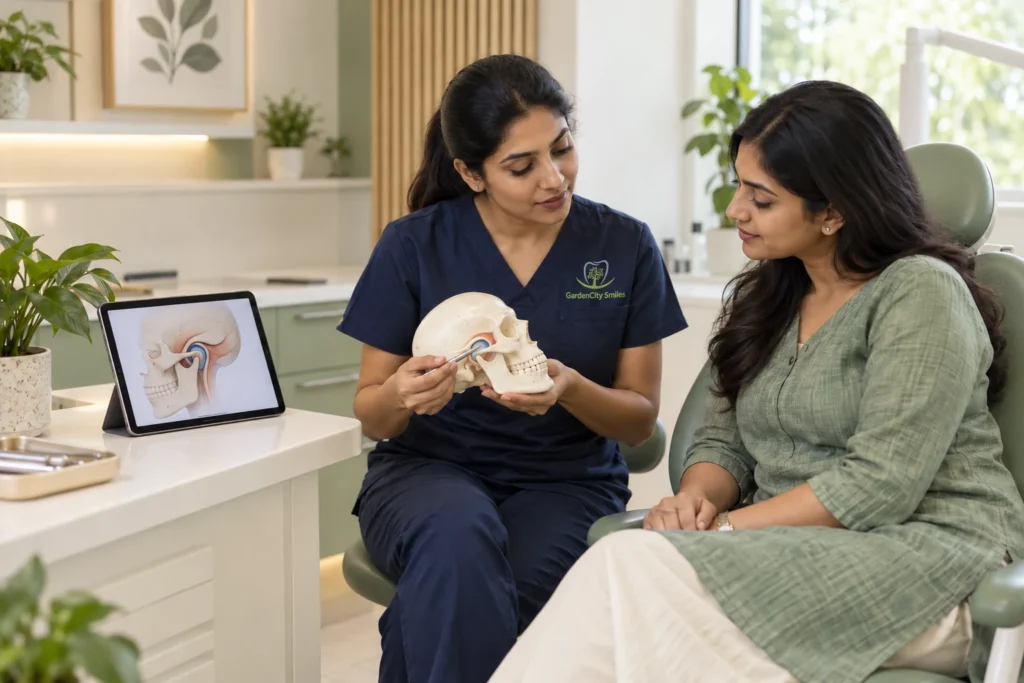
Consultation for jaw, joint and muscle pain in Yelahanka, Bengaluru. We review your symptoms and examine your jaw to understand what may be causing the discomfort.
Where Is Your Jaw Pain?
This illustration shows common areas where jaw-related discomfort may be felt. The location can guide the examination, but it cannot establish the cause by itself.
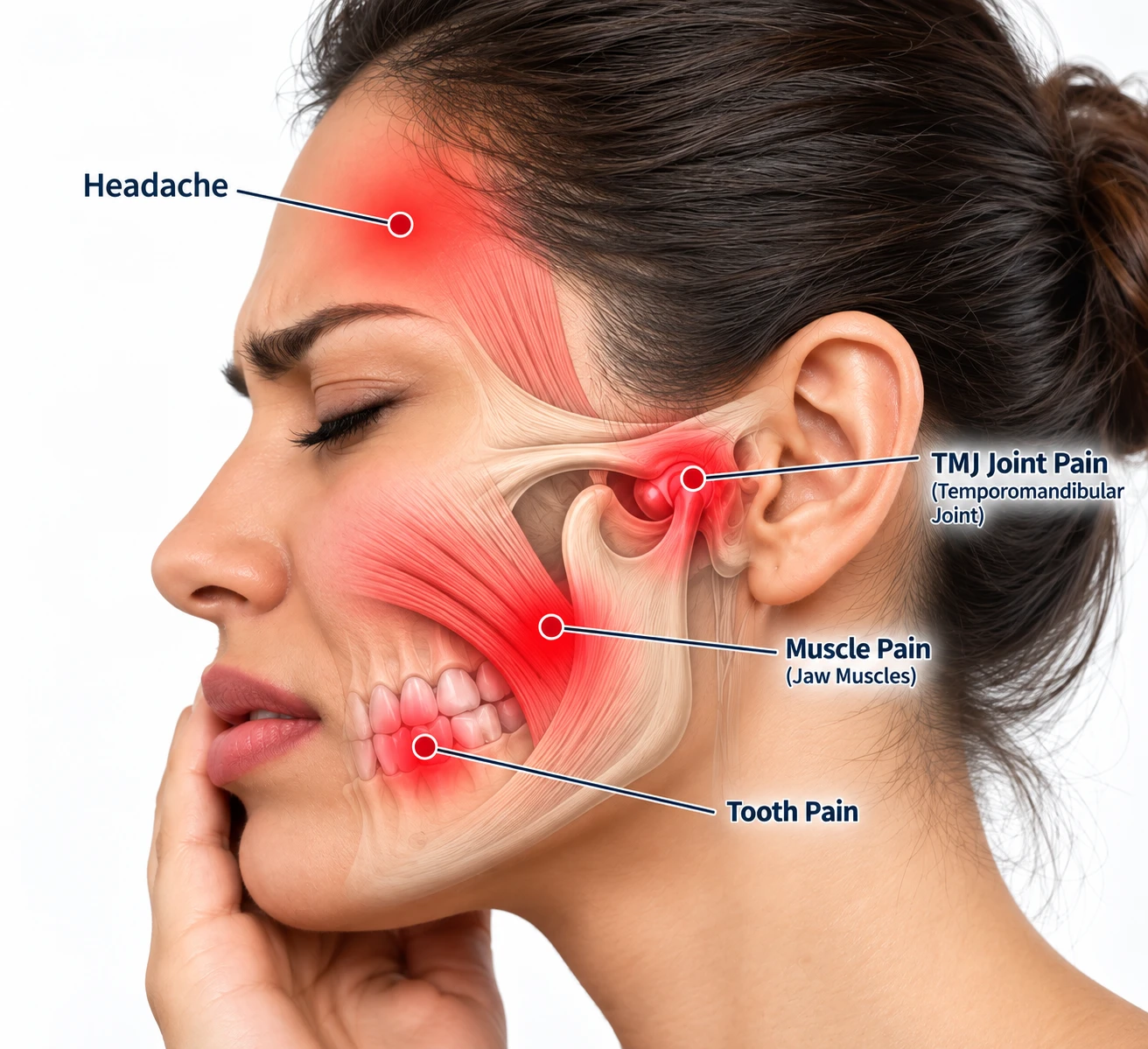
Jaw pain may also come from teeth, sinuses, nerves, ears or other medical conditions. Severe swelling, fever, trauma, chest pain, breathing difficulty, or a jaw stuck open or closed needs prompt care.
Start With the Pattern, Not a Label
Pain & muscle pattern
Tenderness in front of the ear, jaw fatigue, temple headache or pain that worsens with chewing, yawning or prolonged talking.
Movement & function
Painful clicking, catching, locking, limited opening, or a new change in how the teeth meet.
Painful clicking, locking or difficulty using the jaw warrants examination. Clicking without pain or restriction often needs no treatment.
Other possible sources
Teeth, gums, sinuses, ears, nerves and some medical conditions can refer pain into the jaw. We consider these possibilities rather than assuming TMD.
Jaw pain may arise from muscles, jaw joints, teeth or other sources. A review of your symptoms and an examination help distinguish temporomandibular disorders from dental and wider facial-pain conditions.
How We Assess Jaw Pain
1. Listen to the pattern
When it began, where it travels, what triggers it, and how it affects eating, speaking and sleep.
2. Examine
Jaw movement, joints, chewing muscles, teeth, gums and bite comfort are checked.
3. Investigate selectively
Imaging is used only when findings indicate it. Medical or allied-health input may be appropriate.
4. Agree on next steps
Monitor, self-management, physiotherapy, reversible care or referral—matched to the findings.

GENTLE, REVERSIBLE FIRST STEPS
What May Help While You Await Your Visit
- Choose softer foods temporarily if chewing aggravates pain.
- Avoid repeated wide opening, forceful stretching and frequent gum chewing.
- Notice daytime clenching and allow the teeth to rest apart.
- Use only exercises recommended for your findings.
These measures may reduce strain but do not replace diagnosis. Avoid permanent bite changes offered as a universal cure.
Frequently Asked Questions
A CLEAR NEXT STEP
Get the Source of Your Jaw Pain Assessed
Book a consultation with the GardenCity Smiles™ clinical team in Yelahanka. We will explain the likely source, whether tests are indicated and the least invasive appropriate next step. Patients can also review our TMJ/TMD and jaw-function care and orofacial pain service before their visit.
To arrange a visit, Call Clinic or message GardenCity Smiles™ on WhatsApp.