
Growing smiles deserve a gentle start
Children’s Dentistry in Yelahanka
From a first check-up to toothache, cavities and developing teeth, care is adapted to your child’s age, comfort and individual needs.
Tell us about previous dental experiences, sensory sensitivities or additional support needs when booking.
Does Your Child Have Toothache or an Injury?
Call promptly and tell us the child’s age, what happened and when, and whether there is pain, swelling, fever or bleeding. View urgent dental guidance →
A knocked-out permanent tooth needs immediate dental advice. Never put a knocked-out baby tooth back into the socket. Difficulty breathing or swallowing, severe spreading swelling, heavy uncontrolled bleeding or serious facial injury requires immediate hospital care.
Choose what you need help with
A Parent’s Guide to Children’s Dental Care
Select a topic to keep its explanation and options together. The guide supports understanding; examination determines what your child needs.
A positive start and practical prevention
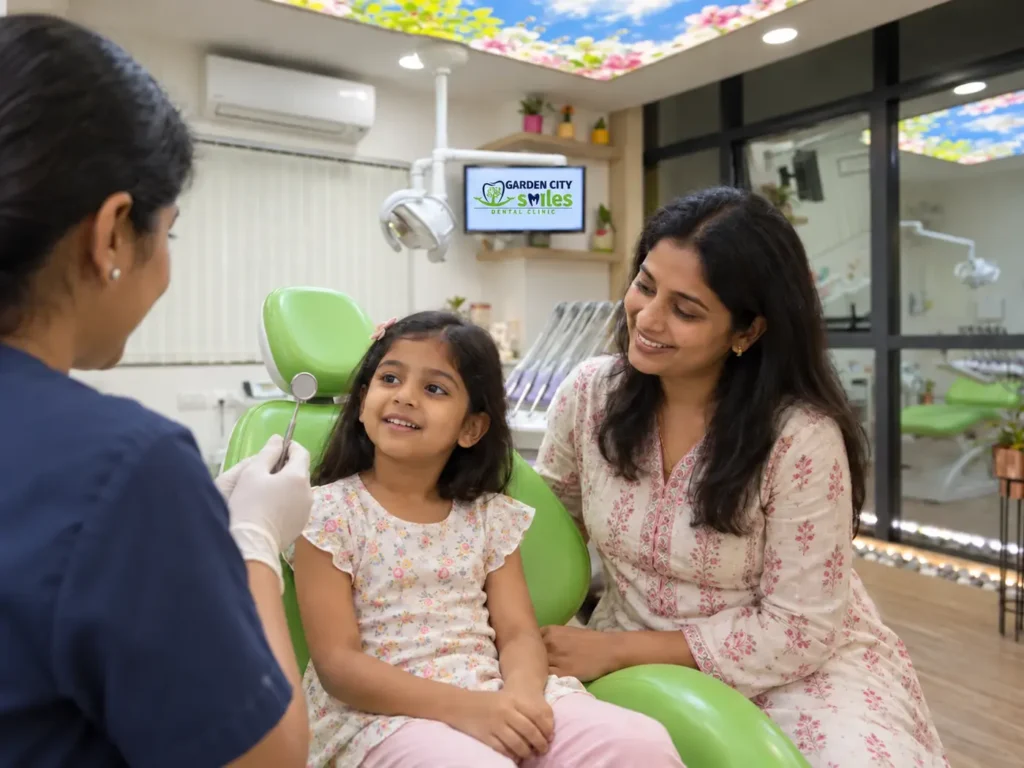
The first visit can introduce the clinic, check developing teeth and help parents establish a realistic home-care routine.
Check-ups and cleaning
We assess teeth, gums, brushing and decay risk. Cleaning and review intervals are planned individually.
Fluoride and fissure sealants
Fluoride varnish or protective sealants may be advised according to age, tooth development and decay risk.
Support for parents
Get practical guidance on supervised brushing, doctor recommended toothpaste, snacks and drinks.
Care for painful or damaged teeth
Baby teeth matter for comfort, eating and the development of adult teeth. Pain should be assessed rather than ignored because the tooth will eventually fall out.
Fillings and children’s crowns
The amount and location of damage guide whether a filling or protective crown is suitable.
Treatment inside a tooth
Pulpotomy or pulpectomy may be considered when decay reaches the tissue inside a tooth. We explain the purpose in plain language.
Removal when needed
If removal is appropriate, we explain why and whether we need to check the space for developing teeth later.
Support as adult teeth come through
Children develop at different rates. Regular checks help separate changes that can be monitored from those needing attention.
Eruption and early tooth loss
We check how teeth are emerging and whether premature tooth loss has affected the space for developing teeth.
Bite and alignment
Crowding, protruding teeth and bite concerns can be reviewed as the child grows. A review does not automatically mean braces.
Habits, sleep and breathing
Discuss thumb sucking, chewing, persistent mouth breathing or snoring so we can consider the appropriate checks or referral.
Make the visit easier
Tell us what your child finds difficult. Previous experiences, sensory preferences and communication needs help us plan a calmer visit.
Explain and show
We introduce the surroundings and explain steps in language the child can understand.
Work with parents
Parent involvement, breaks and pace are considered alongside the child’s dental needs.
Prepare without pressure
Describe the visit simply. Avoid promising that treatment will or will not happen at the first appointment.
Parent information
Home Care Guidance by Age
A calm, structured appointment
Your Child’s First Visit

01
Tell Us
Share the concern, medical history, medicines, allergies and previous dental experiences.
02
Gentle Examination
We start by looking and building familiarity. X-rays are considered only when clinically needed.
03
Clear Explanation
Parents receive an explanation of findings, alternatives and whether care can be staged.
04
Plan and Review
You leave with home-care advice and an individual treatment or review plan.
The first appointment may focus on examination, familiarisation and planning. Treatment depends on clinical need, urgency and the child’s readiness.
Questions Before Your Child’s Visit
A useful first visit is when the first tooth appears, or by the first birthday. If your child is older and has not attended, start with a consultation now.
Not necessarily. Examination, familiarisation and planning may be the main purpose. Urgent needs, treatment complexity and the child’s readiness guide what happens.
Tell us when booking. Previous experiences, sensory sensitivities, communication needs, breaks and parent involvement can be considered when planning the appointment.
Baby teeth support eating, speech, comfort and space for developing teeth. Whether a tooth needs treatment, monitoring or removal depends on consultation.
Depending on the tooth and damage, options may include preventive care, a filling, a children’s crown, treatment inside the tooth or removal. We explain the alternatives.
No. It may establish how teeth and jaws are developing and whether monitoring, early treatment or later review is reasonable.
Bring medical information, a list of medicines and allergies, previous dental records if available and any comfort item that helps your child settle.
Arrange Your Child’s Dental Visit
Tell us what is worrying you and anything that may help your child feel more comfortable. We will help arrange an appropriate consultation.
GardenCity Smiles™ · Yelahanka New Town, Bengaluru
Mon–Sat: 9:30 AM–7:30 PM · Sunday by appointment.
To arrange a visit, Call Clinic or message GardenCity Smiles™ on WhatsApp.