
Practical guidance for growing smiles
Children’s Dental Care Guide
Clear, age-by-age guidance for brushing, food habits, dental visits, toothache and injuries—so parents know what to do next without guessing.
This guide supports understanding. A dental examination is needed for an individual diagnosis or treatment recommendation.
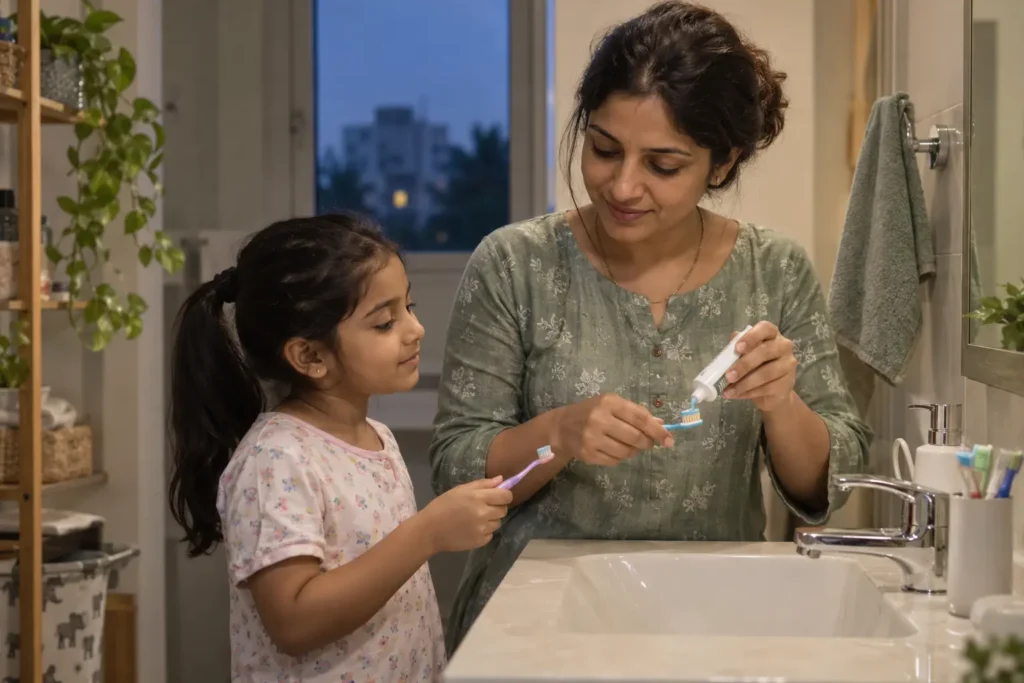
Pain, swelling or a dental injury?
Do not wait for a routine visit when your child has persistent pain, facial swelling, fever with dental symptoms, uncontrolled bleeding or a knocked-out permanent tooth. Open urgent dental guidance →
Age-by-age care
Choose Your Child’s Stage
Select an age group. The guidance appears immediately below and stays visible on phones and tablets.
First tooth to 2 years
Build a simple routine as soon as the first tooth appears.
Brushing
A parent or carer should brush twice daily with a small, soft brush. Ask your dentist which toothpaste and amount are appropriate.
Drinks and feeding
Keep bedtime drinks to plain water after brushing. Frequent sugary drinks and snacks raise decay risk.
First dental visit
Arrange a dental visit when the first tooth appears or by the first birthday, and earlier if something worries you.
Ages 3–5
Children still need hands-on adult help even when they want to brush independently.
Supervised brushing
Brush twice daily and check every surface. Use only the amount of doctor recommended toothpaste advised for your child.
Food rhythm
Keep sweet foods and drinks to mealtimes where possible instead of frequent grazing throughout the day.
Watch for change
White or brown spots, pain, food avoidance, swelling or broken teeth deserve dental examination.
Ages 6–11
Mixed baby and permanent teeth make this a high-value stage for prevention and development checks.
Permanent molars
New back teeth can be difficult to clean. The dentist may discuss fissure sealants or other preventive measures when appropriate.
Independence with checking
Let children practise, but continue supervising and checking whether they reach the gumline and back teeth effectively.
Growth and bite
Eruption, crowding, oral habits and bite development can be reviewed. Review does not automatically mean braces must start.
Ages 12 and above
Teenagers need a practical routine that works around school, sport, orthodontics and changing food habits.
Daily cleaning
Brush twice daily and clean between teeth. Braces or aligners may require extra cleaning guidance.
Sports and injuries
Discuss a protective mouthguard for contact sport. Dental trauma should be assessed promptly.
Review habits
Frequent energy drinks, sugary beverages, vaping or tobacco can affect oral health. Use the visit for an honest, non-judgmental discussion.
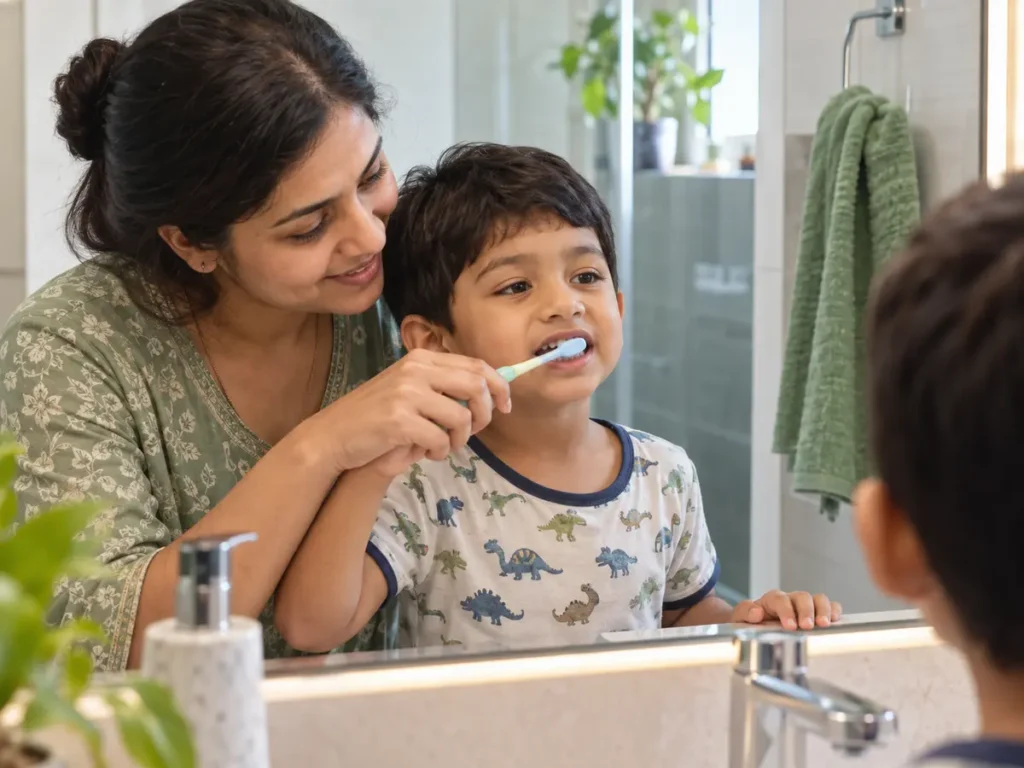
A routine children can actually follow
Make Twice-Daily Brushing Easier
- Use a small, soft toothbrush suited to the child’s mouth.
- Keep the same morning and bedtime sequence.
- Let the child begin, then have an adult finish or check.
- Use the amount of doctor recommended toothpaste advised for the child.
- Encourage spitting after brushing; follow your dentist’s advice about rinsing.
- Replace the brush when bristles spread or after illness when advised.
If brushing causes pain, repeated bleeding or strong resistance, do not simply force the routine—ask for an examination.
What is happening today?
A Quick Action Guide
Choose the closest concern for immediate next-step guidance. This does not diagnose the problem.
Toothache
Arrange a prompt dental consultation. Note where it hurts, when it started, whether pain wakes the child, and whether hot, cold or biting makes it worse. Do not place aspirin on the tooth or gum.
Broken or chipped tooth
Keep any fragment you find, avoid biting on the tooth and contact the clinic. Even a small break may expose a sensitive layer or have deeper damage that is not obvious.
Swelling or fever
Facial or gum swelling with dental pain needs urgent examination. Difficulty breathing or swallowing, rapidly spreading swelling or a very unwell child requires immediate medical care.
Knocked-out tooth
Permanent tooth: seek immediate dental guidance, handle only the crown and do not scrub the root. Baby tooth: never put it back into the socket. If uncertain which tooth it is, call immediately.
Prepare without creating fear
Before the First Dental Visit
Use calm, ordinary language: the dentist will look, count teeth and help keep them healthy. Avoid promising that nothing will happen or using the visit as a threat.
Tell the clinic about previous experiences, medical conditions, medicines, allergies, sensory sensitivities or communication needs. Bring any available dental records and a familiar comfort item if useful.
The first visit may focus on examination, familiarisation and planning. The child’s needs and readiness guide the pace.

Small habits, repeated consistently
Food, Drinks and Oral Habits
Reduce frequency, not only quantity
Repeated sugary snacks and drinks keep teeth exposed to acid more often. A practical meal-and-snack rhythm is usually easier than constant restriction.
Water between meals
Plain water is the simplest default between meals and after bedtime brushing. Ask an appropriate health professional about feeding concerns.
Discuss habits without blame
Thumb sucking, mouth breathing, nail biting, grinding or prolonged bottle use may need context, monitoring or consultation—not automatic treatment.
Parents often ask
Frequently Asked Questions
A useful first visit is when the first tooth appears or by the first birthday. If your child is older and has not attended, begin with a consultation now.
The interval should reflect your child’s oral health, decay risk, development and previous treatment. The dentist will recommend an appropriate review schedule after consultation.
Tell us before the visit. We can consider previous experiences, sensory needs, communication preferences, breaks and parent involvement when planning the appointment.
Baby teeth support eating, speech, comfort and space for developing permanent teeth. Whether a tooth needs treatment, monitoring or removal depends on the tooth and examination.
Bring relevant medical information, medicine and allergy details, previous dental records when available, and any comfort item that helps your child settle.
Not always. Examination, familiarisation and planning may be the main purpose. Urgency, complexity and the child’s readiness guide what happens.
Continue with the right page
Related Children’s Dental Care
Need advice for your child?
Tell us the child’s age, what is worrying you and whether there is pain, swelling, fever, bleeding or an injury. We will guide you to the appropriate next step.