01
Healthy enamel first
Active decay, damaged enamel or sensitivity should be assessed before adding a decorative attachment.
Restore & Replace Teeth
Root Canal TreatmentCrowns & BridgesDental ImplantsRemovable DenturesFull Mouth RehabilitationStraightening & Gum Treatments
Braces & Teeth StraighteningInvisalign® Clear AlignersLaser Gum SurgeryTeeth jewellery is a decorative, elective service—not a dental treatment. A suitability check comes first so appearance is considered without overlooking enamel, gums, bite or cleaning.
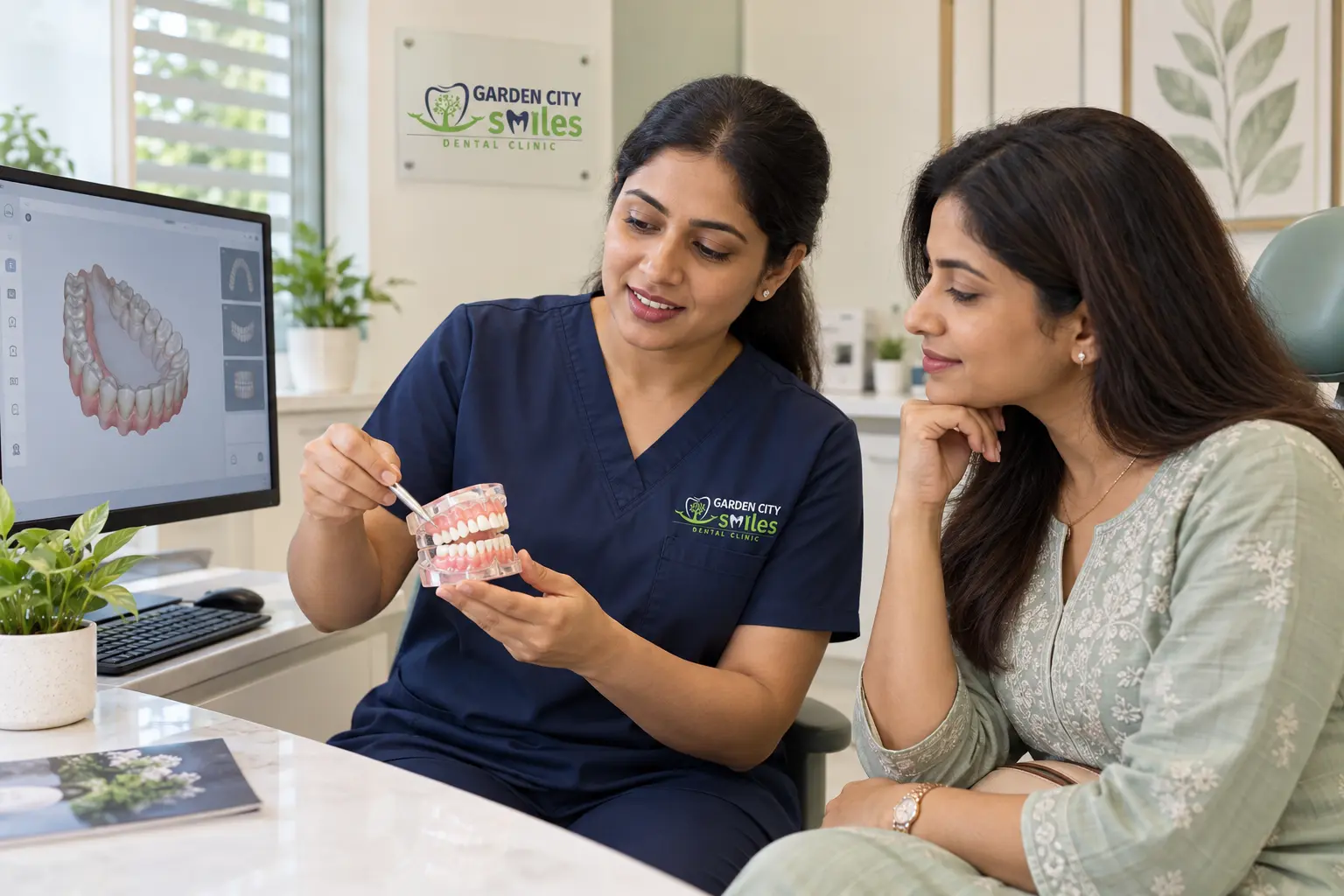
When appropriate, a small dental jewel may be bonded to the enamel without drilling. The priority is healthy placement, careful bonding, realistic expectations and a clear plan for professional review or removal.
Active decay, damaged enamel or sensitivity should be assessed before adding a decorative attachment.
The position must allow effective brushing and should not create an avoidable plaque trap.
Tooth contact, grinding, nail biting and other habits may make a placement unsuitable or less durable.
Professional bonding and removal are intended to protect the tooth surface. Do-it-yourself kits are not recommended.
The dentist examines enamel, gums, bite and the proposed tooth before discussing placement.
Size and location are selected to support appearance, cleaning and comfort.
When suitable, the enamel surface is cleaned and conditioned; drilling is generally not required.
The jewel is bonded, the bite is checked and you receive guidance on cleaning, habits and what to do if it loosens.
When the tooth and chosen placement are suitable, professional bonding is generally planned without drilling the enamel.
Yes, professional removal can be planned. The dentist then cleans and polishes residual bonding material while protecting the enamel.
No. Decay, enamel defects, gum problems, unfavourable bite contact or habits may make placement inappropriate.
We do not recommend self-bonding kits. Uncontrolled materials or placement can damage enamel, irritate gums or interfere with the bite.
These links provide context—not a diagnosis. Choose the route that best matches what you want to understand next.
← Back to all treatmentsWe will first check whether placement is sensible for your tooth and oral health. If it is not, we will say so clearly.