

Dental Splints for Jaw Pain & Tooth Protection
Prosthodontist & Implantologist · American Board Certification in Orofacial Pain
What Would a Splint Do for You?

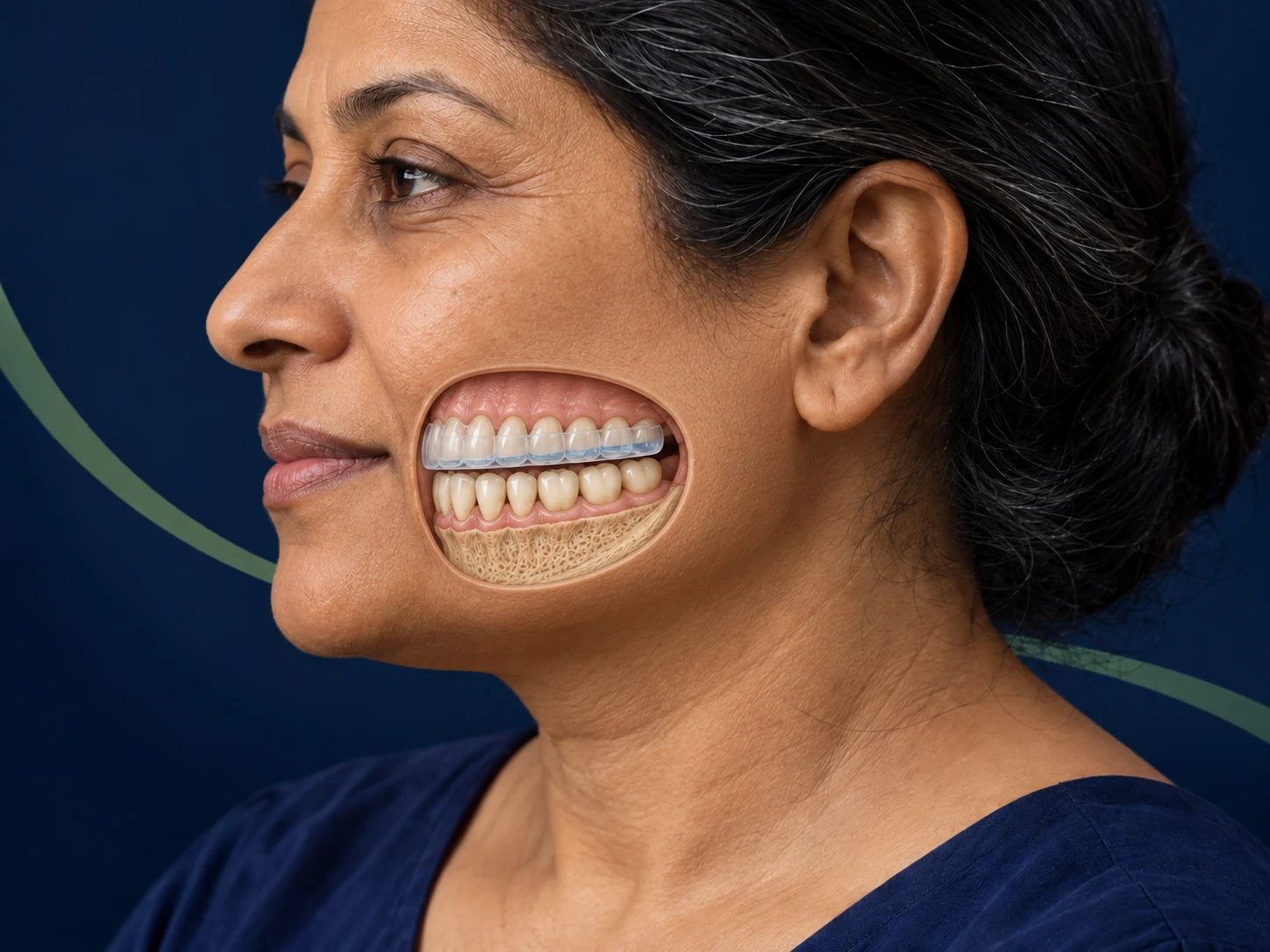
A Barrier Between Biting Surfaces
A fitted splint can protect tooth surfaces from direct contact when grinding is causing damage. It does not guarantee that grinding stops. The reason for wear or broken restorations still needs examination.
Pain Relief Is Not Guaranteed
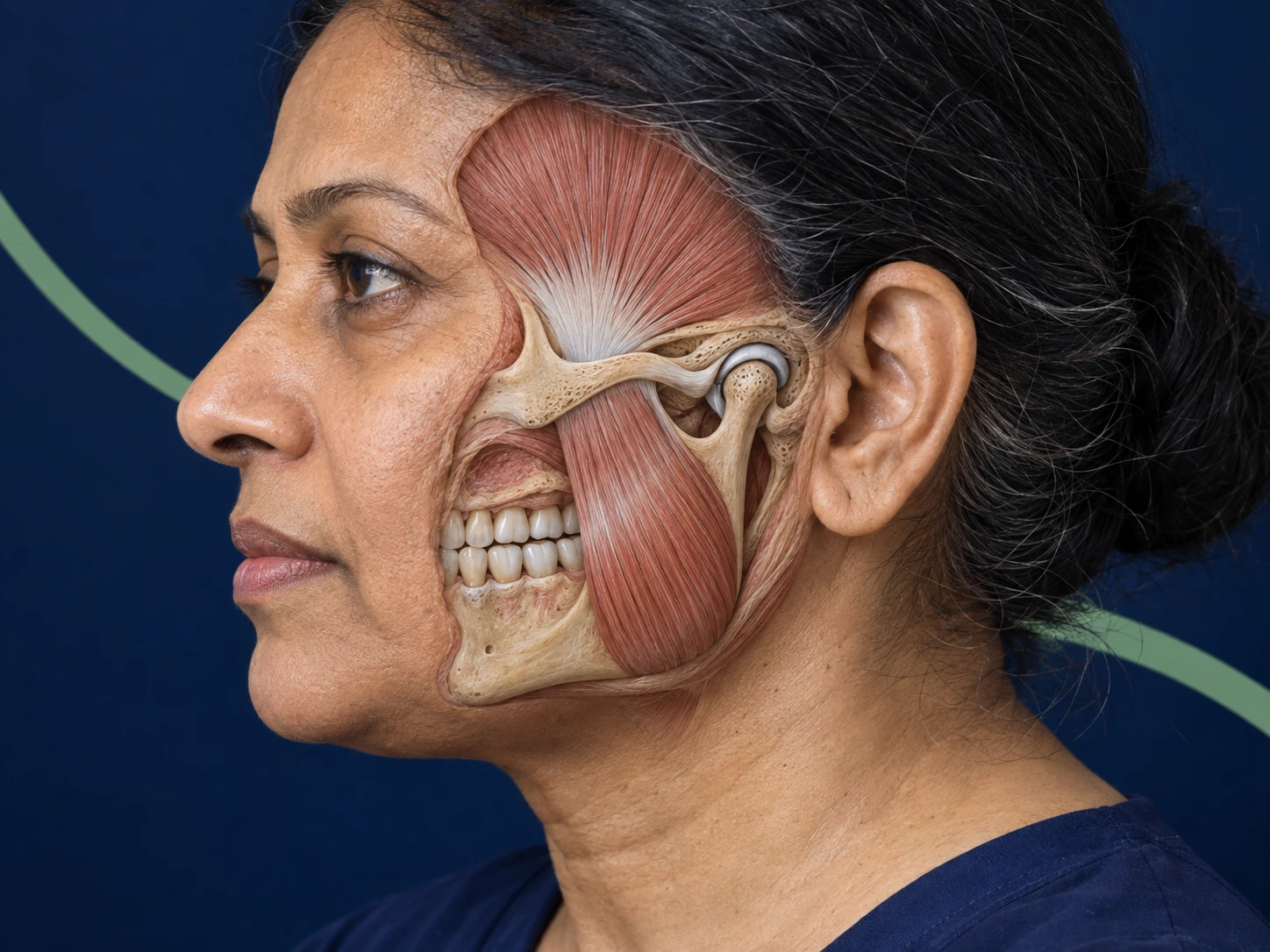
A splint may be considered within a selected management plan. Evidence for improving TMD pain is limited, and many patients need other approaches. We agree the intended goal and how the response will be reviewed.

Your Appliance Needs Individual Checks
The clinician checks that it seats securely, is comfortable and has the intended tooth contacts. We show you how to insert and remove it. Do not heat, trim or reshape it yourself.
A Grinding Splint Is Not a Sleep-Apnea Appliance
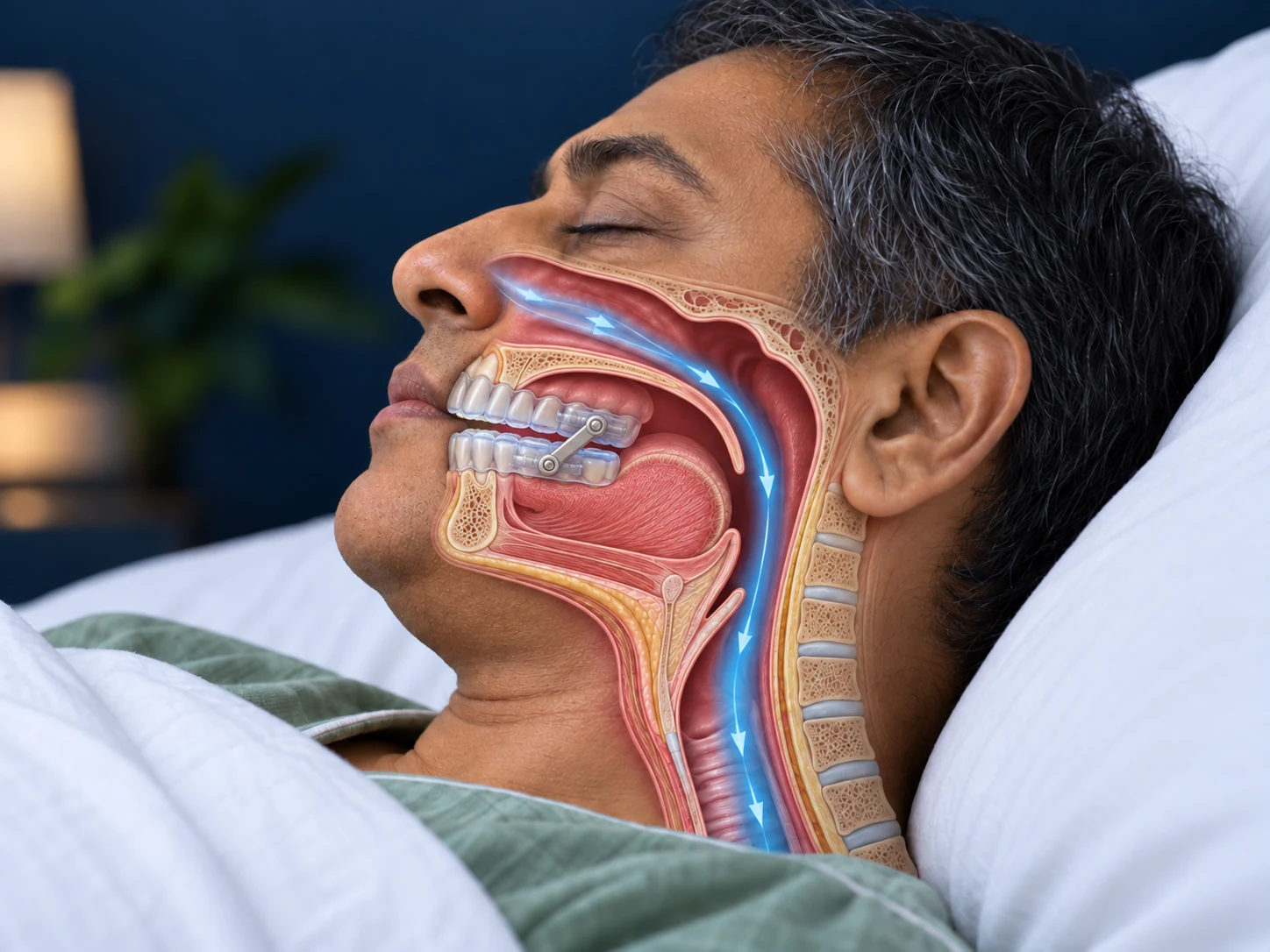
The sleep appliance illustrated here uses upper and lower components to hold the lower jaw forward. A grinding splint has a different purpose. The devices are not interchangeable, and sleep-apnea care requires a separate consultation.
Starting Your Splint
1 · Agree the Purpose
We assess teeth, gums, jaw symptoms and relevant sleep history. If a splint is proposed, ask what it is meant to achieve, what alternatives exist and when the response will be reviewed.
2 · Record Your Teeth and Bite
A scan or impressions and bite records help make an appliance that fits your mouth. The design depends on the purpose and clinical findings.
3 · Fit It and Practise
We check retention, comfort and contact, then show you insertion, removal and cleaning. Follow the individual wear schedule rather than assuming every splint is worn all night or all day.
4 · Review Fit and Response
Bring the splint to reviews. We check symptoms, wear, fit and bite, and adjust the plan when needed. Replacement depends on its condition and changes in your mouth.
Care, Comfort and When to Contact Us
Cleaning and Storage
Follow the cleaning instructions for your appliance material. Rinse and clean it regularly; avoid hot water and abrasive products unless specifically advised. Keep it in its protective case, away from heat and pets.
Saliva, Speech or Initial Awareness
Some people notice extra saliva or awareness of the appliance at first. Ask us if this persists or makes wearing difficult. Do not force yourself to continue with increasing pain.
New Pain, Soreness or a Changed Bite
Stop using the appliance and contact the clinic if it causes pain. Report a persistent change in how your teeth meet, new locking or pressure on particular teeth. Do not adjust it yourself.
A Loose, Cracked or Damaged Splint
Do not wear a broken appliance or one that no longer fits securely. Contact the clinic for examination and bring it with you.
After a Filling, Crown or Other Dental Work
Tell the treating dentist that you wear a splint. Changes to teeth can alter its fit, and it should be checked before you resume use.
How Long Will I Need It?
There is no single duration. The purpose, response, tooth protection needs and review findings determine whether to continue, adjust or stop.
Questions Before Choosing an Appliance
Is a Shop-Bought Night Guard Equivalent?
It does not provide the same personal guidance, fit checks or follow-up. A poorly fitting device can be uncomfortable. Discuss any existing guard before continuing to use it.
Will It Permanently Correct My Bite?
A conservative splint should not be sold as a way to permanently change your bite. Any persistent bite change needs review.
Do I Need a Splint for Painless Clicking?
Not automatically. Painless clicking with normal movement often needs no treatment. An appliance needs a separate clinical reason.
What If I Snore or Have Sleep Apnea?
Tell us before an appliance is prescribed. Sleep-breathing problems need a dedicated consultation; a grinding splint is not a substitute for sleep-apnea treatment.
Let’s Discuss Dental Splints
To arrange a visit, Call Clinic or message GardenCity Smiles™ on WhatsApp.
