
Full Mouth Rehabilitation in Yelahanka
When several dental problems affect eating, comfort or confidence, a coordinated plan helps you understand what can be saved and what needs care.
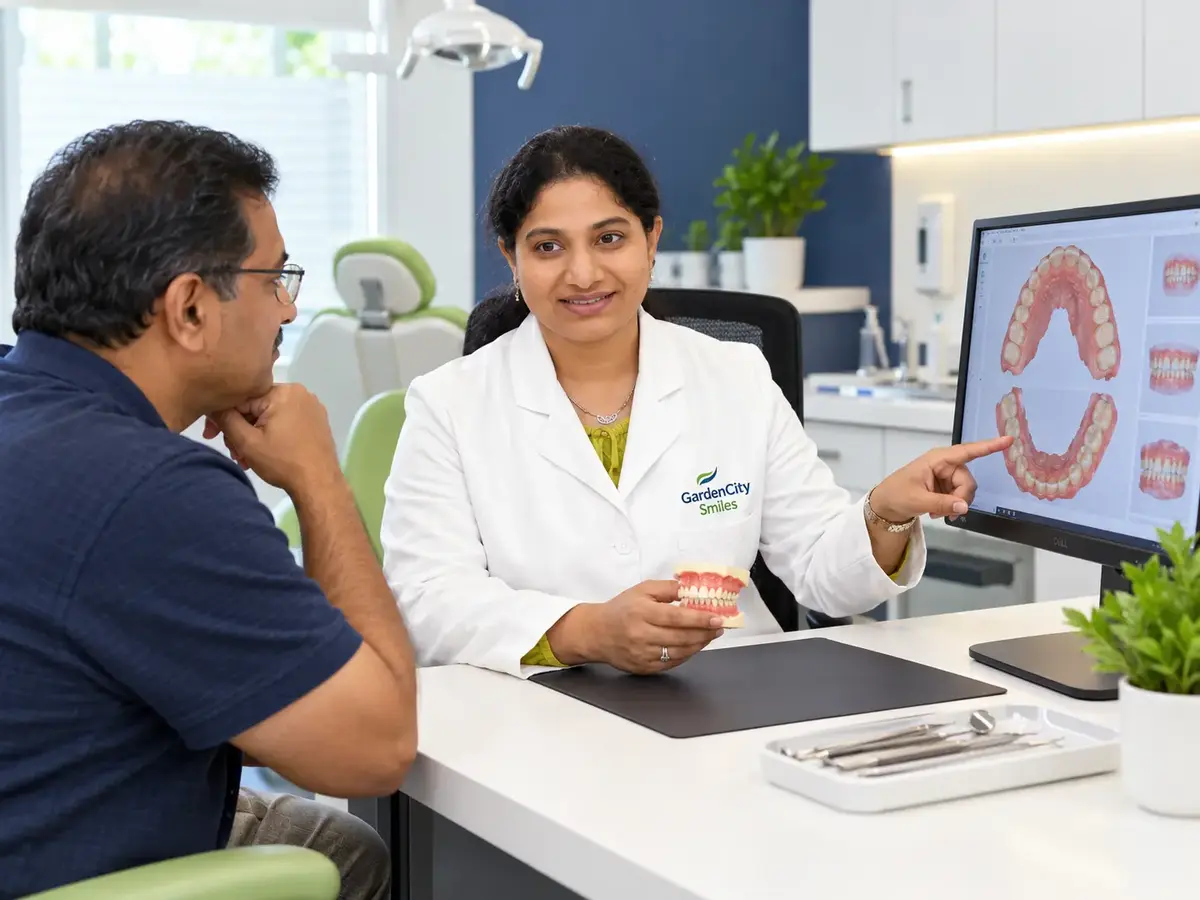
Dr Deepthi Kalahasti
Prosthodontist & Implantologist
GardenCity Smiles™, Yelahanka New Town, Bengaluru
What Is Happening With Your Teeth?
Choose a concern to explore what your dentist will consider.
Tooth shape has changed
What you may notice
You may notice flatter edges, sensitivity or teeth that look shorter.
What we assess
We assess the pattern of wear and possible causes, including acid exposure and grinding.
What shapes the plan
The remaining tooth structure, symptoms and whether the cause is controlled help guide the options.
Gaps affect the wider plan
What you may notice
You may avoid chewing in some areas or find your existing replacement difficult to use.
What we assess
We assess the remaining teeth, gums, supporting bone and available space.
What shapes the plan
Tooth support, cleaning access and your preferences influence the discussion of bridges, dentures or implants.
Different teeth may need different care
What you may notice
You may have broken fillings, loose crowns or repeated problems around existing work.
What we assess
We check each tooth and restoration, including decay, cracks and gum health.
What shapes the plan
Some restorations can be repaired; others may need replacement. The decision is made tooth by tooth.
Find the reason for discomfort
What you may notice
You may avoid certain foods, chew on one side or feel that your teeth do not meet comfortably.
What we assess
We consider teeth, gums, chewing muscles and jaw joints.
What shapes the plan
Symptoms alone do not establish the cause or mean that extensive reconstruction is necessary.
What Can Be Preserved, Repaired or Replaced?
Each tooth has its own role in the plan. Explore this example to see why treatment can differ from one tooth to another.
Educational example; your plan follows an examination.
Keep maintainable teeth
Healthy or maintainable teeth may need monitoring, prevention or gum care. Full-mouth rehabilitation does not automatically mean crowning or removing every tooth.
Restore damaged teeth where appropriate
Depending on the findings, repair may involve a filling, onlay, crown or other care. Root canal treatment is considered only when indicated; the same treatment is not applied to every tooth.
Discuss replacement only where needed
Missing or non-restorable teeth may lead to a discussion of bridges, dentures or implants. Options depend on support, health, function and maintenance needs.
A coordinated plan does not mean every tooth needs treatment. Your examination identifies priorities, alternatives and what can be monitored.
How Your Plan Takes Shape
Your sequence depends on the findings. Open each stage to see what happens and what is reviewed before moving forward.
What happens: We review your teeth, gums, bite, symptoms and medical history. Photographs, scans or X-rays are selected when appropriate.
Your part: Explain what makes eating or daily life difficult and bring existing records.
Before moving on: We clarify the problems, uncertainties and whether more focused consultation is needed.
What happens: Urgent problems, active decay and gum disease are addressed according to priority.
Your part: Follow the home-care guidance and report how symptoms change.
Before moving on: We review healing, disease control and the outlook for affected teeth.
What happens: We discuss preservation, repair and replacement options, including a smaller or phased approach where appropriate.
Your part: Ask about alternatives, limitations and the effects of delaying or declining care.
Before moving on: Agree the sequence, expected reviews and consent for the proposed treatment.
What happens: Some plans use provisional restorations or a trial to review appearance, speech and function.
Your part: Report what feels comfortable and what needs attention.
Before moving on: We assess the response and make changes where needed. A trial is not required in every plan.
What happens: Restorative or replacement treatment is completed in the agreed order, with other specialists involved when needed.
Your part: Attend appointments and follow the instructions for each procedure.
Before moving on: Fit, function, gum health and cleaning access are reviewed.
What happens: Follow-up checks monitor restorations, oral health and comfort.
Your part: Maintain daily cleaning and bring any prescribed protective appliance to reviews.
Ongoing review: Visit intervals reflect your mouth and risk factors. Report new problems early.
Life Between Appointments
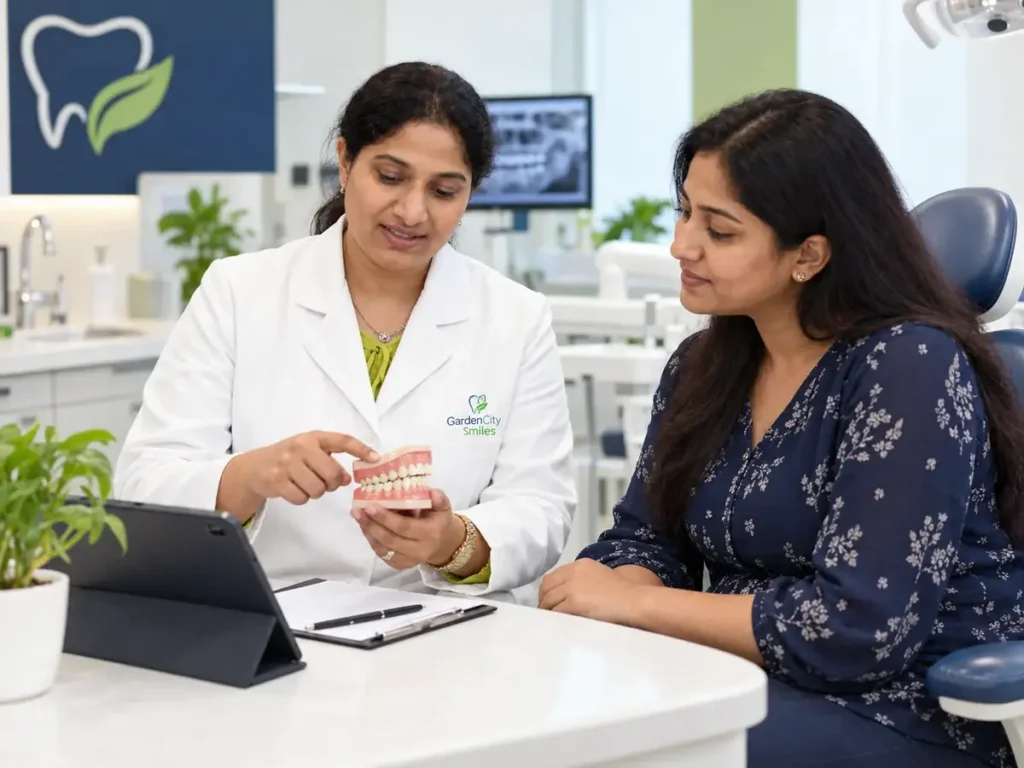
Whether temporary teeth or restorations are needed depends on the plan. Ask what you will have between stages and what limitations to expect; do not assume that every phase can be completed immediately.
The effects depend on the procedure. Ask about food textures, speaking, recovery time and work arrangements before each stage. Report persistent difficulty rather than waiting until treatment is finished.
You will be shown how to clean around your restorations or replacements. Protective appliances are recommended only when appropriate; they do not replace daily care or review appointments.
Follow the written instructions for the treatment completed at that visit. Contact the clinic for worsening pain, swelling, bleeding, a loose temporary restoration or a bite that feels persistently uncomfortable.
Do not wait for the next treatment stage to report a problem. Call Clinic. Breathing or swallowing difficulty, or rapidly increasing facial swelling, needs urgent medical examination.
Questions Before You Decide
Rehabilitation coordinates care for extensive dental problems, with function and oral health as well as appearance in mind. A smile makeover mainly describes appearance-focused care. Full-arch implants are one approach to replacing an arch of teeth; they are not required for every rehabilitation plan.
No. The findings for each tooth guide the recommendation. Maintainable teeth may be preserved, while others need repair or replacement. Ask why each proposed procedure is needed and what alternatives exist.
Sometimes a more limited or phased approach is appropriate. Clinical priorities, disease activity and how treatments depend on one another determine where it is reasonable to pause.
The time depends on the treatment combination, healing, laboratory stages and review findings. You should receive an individual sequence and have changes explained as the plan progresses.
Risks differ by procedure and may include sensitivity, discomfort, infection, restoration damage or the need for further treatment. Appearance and function have limits, and no restoration is maintenance-free. Your clinician should explain the risks and alternatives for each proposed procedure.
Jaw pain needs its own diagnosis. Irreversible changes to teeth or the bite should not be used routinely as a treatment for TMD. Where symptoms suggest a jaw or facial-pain problem, we investigate it separately as part of the discussion.
Dr Deepthi Kalahasti, Prosthodontist & Implantologist, and the GardenCity Smiles™ team coordinate the plan. Other specialists contribute when the treatment requires their expertise.
Further patient information: American College of Prosthodontists · NIDCR jaw-pain guidance.
Start With a Clear Understanding of Your Needs
Bring previous dental records or scans, your current medicines list, and any dentures or protective appliances you use. Tell us what you most want to improve.
New patients: please arrive 10 minutes early to complete registration.
Explore related care:
Crowns & Bridges Dental Implants Removable Dentures TMJ & Jaw Pain Care
To arrange a visit, Call Clinic or message GardenCity Smiles™ on WhatsApp.