
One view. A clearer explanation.
Choose a position to explore the tooth, what we check and the possible next steps.
premolarFirst
molarSecond
molarWisdom tooth
Third molar
Explore possible problems
Choose an area to see why it may need checking.
The image shows an example position, not a diagnosis.
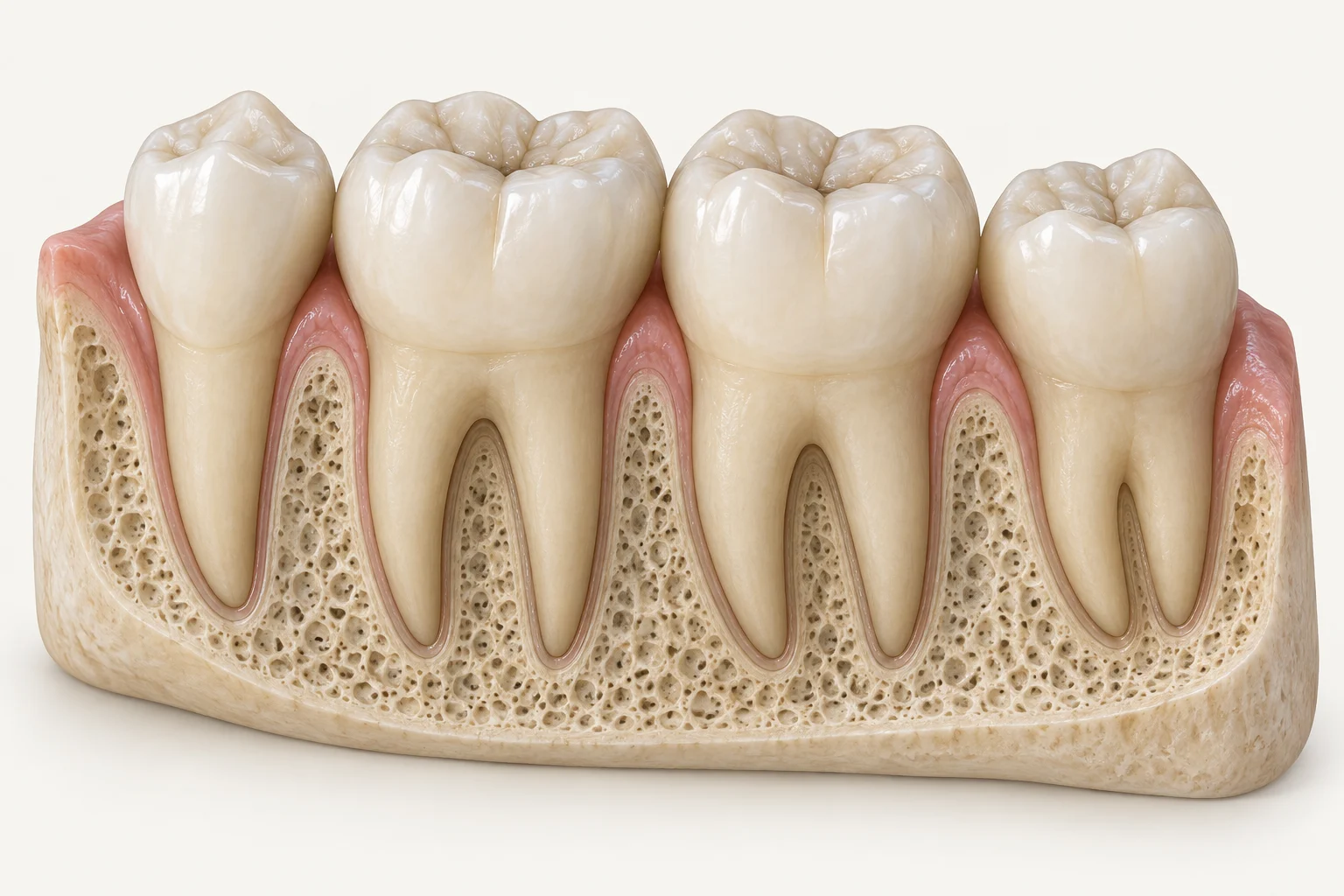
Fully erupted
What you are seeing
The last tooth is upright, with its crown above the gum. The three teeth beside it provide context.
What the dentist checks
Cleaning access, gum health, decay and the way the teeth meet.
What may happen next
If it is healthy and can be maintained, review may be appropriate. Any disease needs to be investigated; eruption alone does not decide treatment.
premolarFirst
molarSecond
molarWisdom tooth
Third molar
Explore possible problems
Choose an area to see why it may need checking.
The image shows an example position, not a diagnosis.
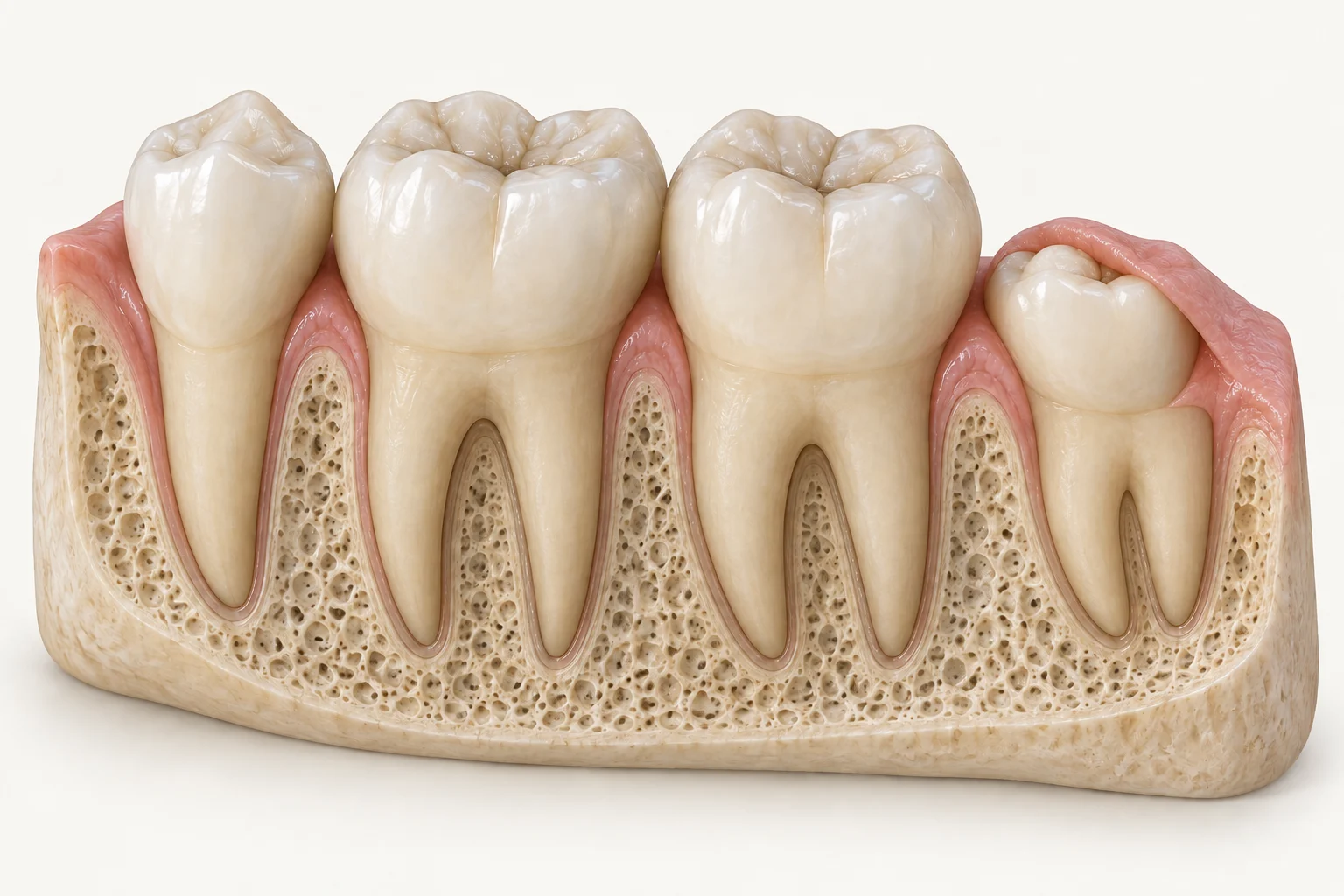
Partially erupted
What you are seeing
Part of the wisdom-tooth crown is visible, while a gum flap covers the back portion.
What the dentist checks
Tenderness, trapped debris, recurrent inflammation and signs that infection is spreading.
What may happen next
Local cleaning or treatment may be needed first. Repeated problems prompt a discussion about longer-term options, including removal when appropriate.
premolarFirst
molarSecond
molarWisdom tooth
Third molar
Explore possible problems
Choose an area to see why it may need checking.
The image shows an example position, not a diagnosis.
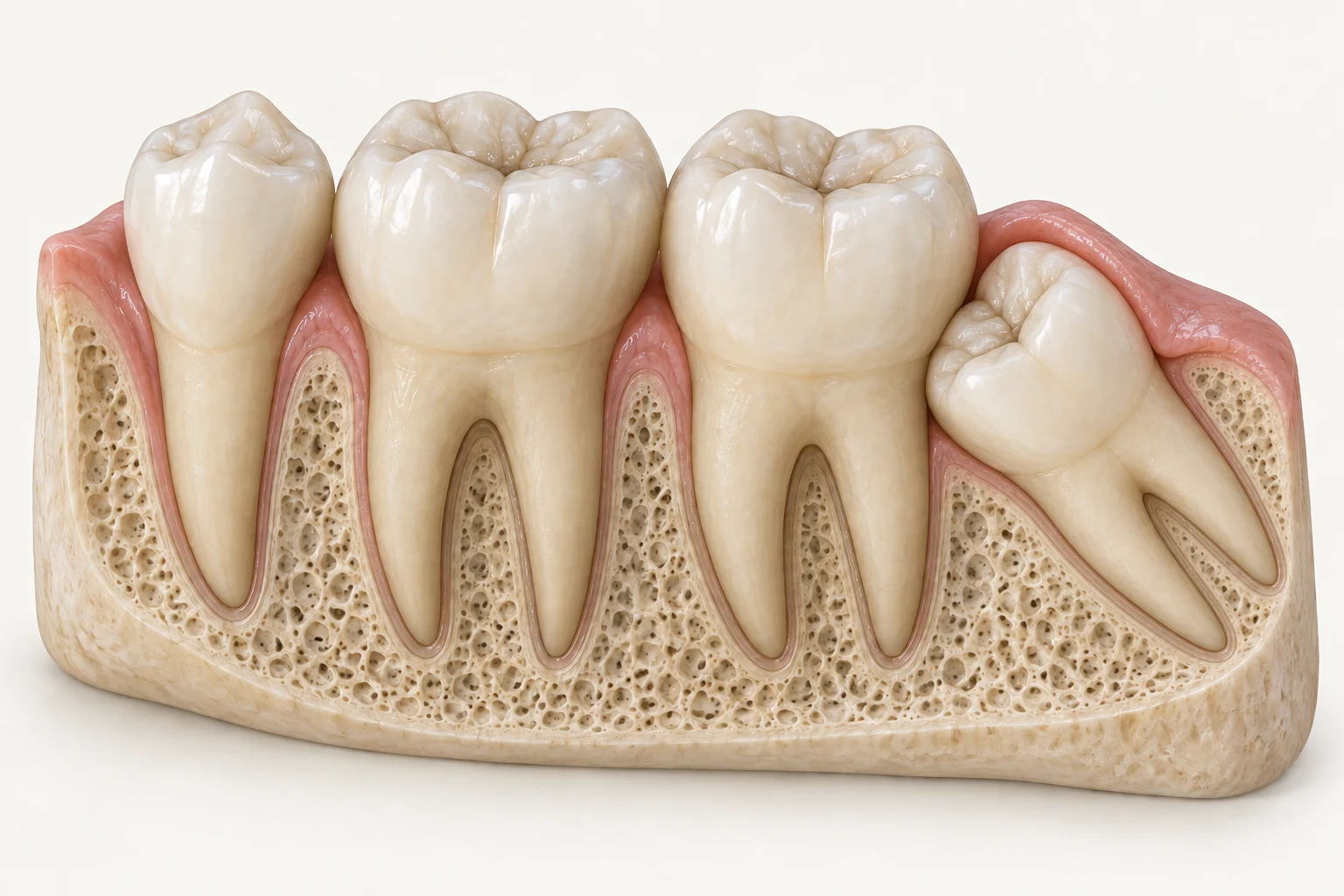
Mesioangular impaction
What you are seeing
The wisdom tooth leans forward towards the second molar. Look at where the crowns come close together.
What the dentist checks
The contact area, decay, gum and bone support around the neighbouring molar.
What may happen next
If disease or damage is found, treatment options are discussed after assessing both teeth. Monitoring or removal depends on the findings and individual risks.
premolarFirst
molarSecond
molarWisdom tooth
Third molar
Explore possible problems
Choose an area to see why it may need checking.
The image shows an example position, not a diagnosis.
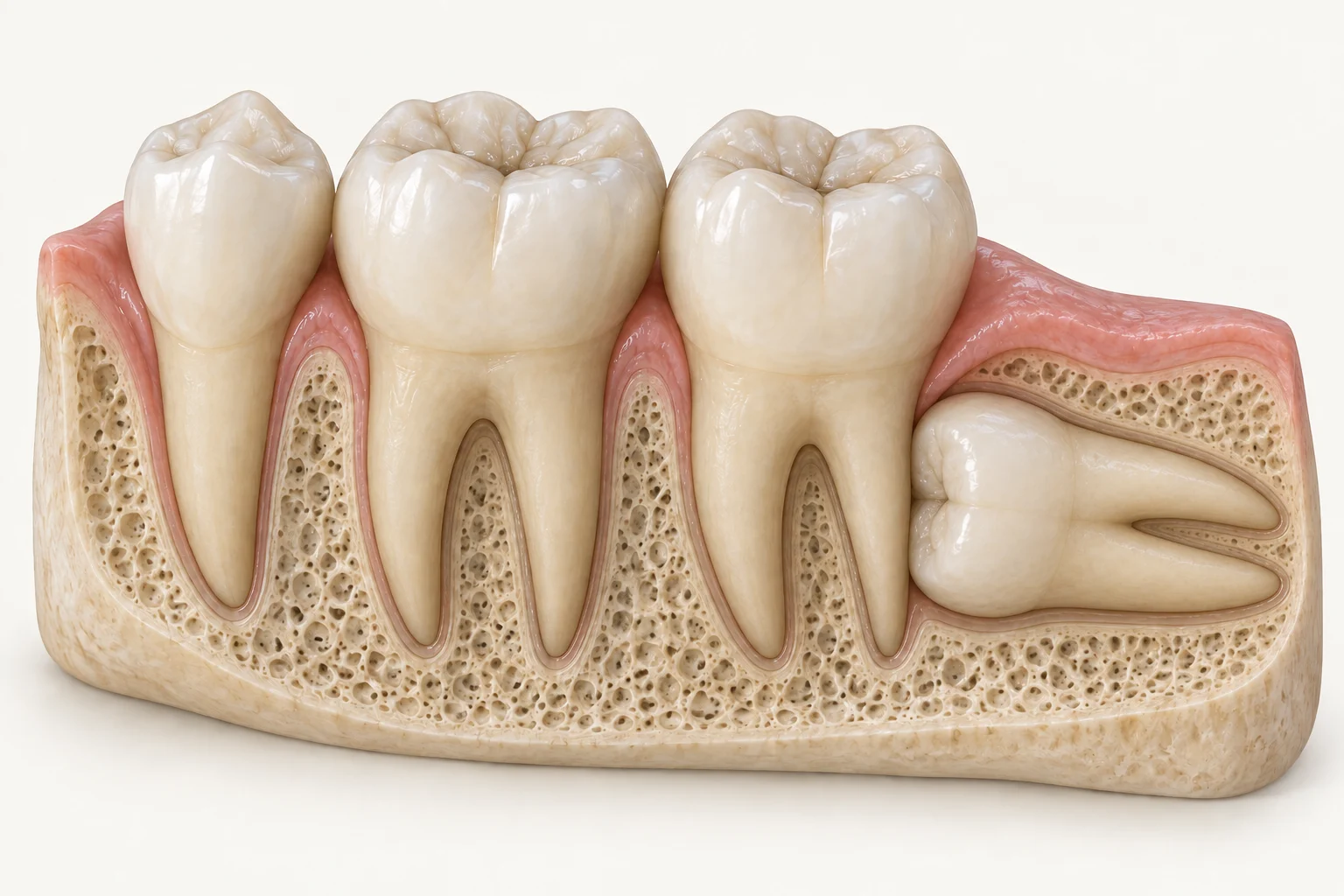
Horizontal impaction
What you are seeing
The wisdom tooth lies on its side beneath the gum, with its crown pointing towards the second molar.
What the dentist checks
The adjacent tooth, bone coverage, root shape and nearby structures on imaging when indicated.
What may happen next
The position affects planning, but does not decide removal on its own. Disease, symptoms and individual risks guide monitoring, treatment or specialist consultation.
Position alone does not decide removal. Examination, imaging when indicated, your health and a discussion of benefits and risks guide the plan.
Could the pain come from somewhere else?
Yes. A neighbouring tooth, jaw muscles, the jaw joint or an ear-related problem may need examination. Finding a wisdom tooth on an X-ray does not by itself establish the cause of pain.
Explore orofacial pain consultation →What Happens at the Visit?
- Listen and examine. We ask about your symptoms and health, then examine the tooth, gum, adjacent molar and jaw.
- Image when needed. The choice of imaging depends on what needs clarification; not everyone needs the same scan.
- Discuss the options. These may include local care, review, removal or specialist consultation. They are possible routes, not steps everyone must follow.
Antibiotics are used only when clinically indicated. If removal is recommended, we explain anaesthesia, relevant risks, alternatives and recovery before you decide.